Our Curriculum: The French Maternelle
At Le Petit Lotus Bleu, we follow the French National Curriculum for preschool. In France, this stage — "La Maternelle" — is mandatory from the age of three. Children begin "Cycle 1", which lasts three years (or four for children starting in our TPS / nursery class), the first key stage of the French education system.
Our teaching methods are based on a child-centered approach that combines well-being, active learning, and structured teaching. Children's safety, happiness, and engagement are fundamental, with a strong emphasis on creativity, artistic expression, physical development, and social skills.
A foundational three-year cycle
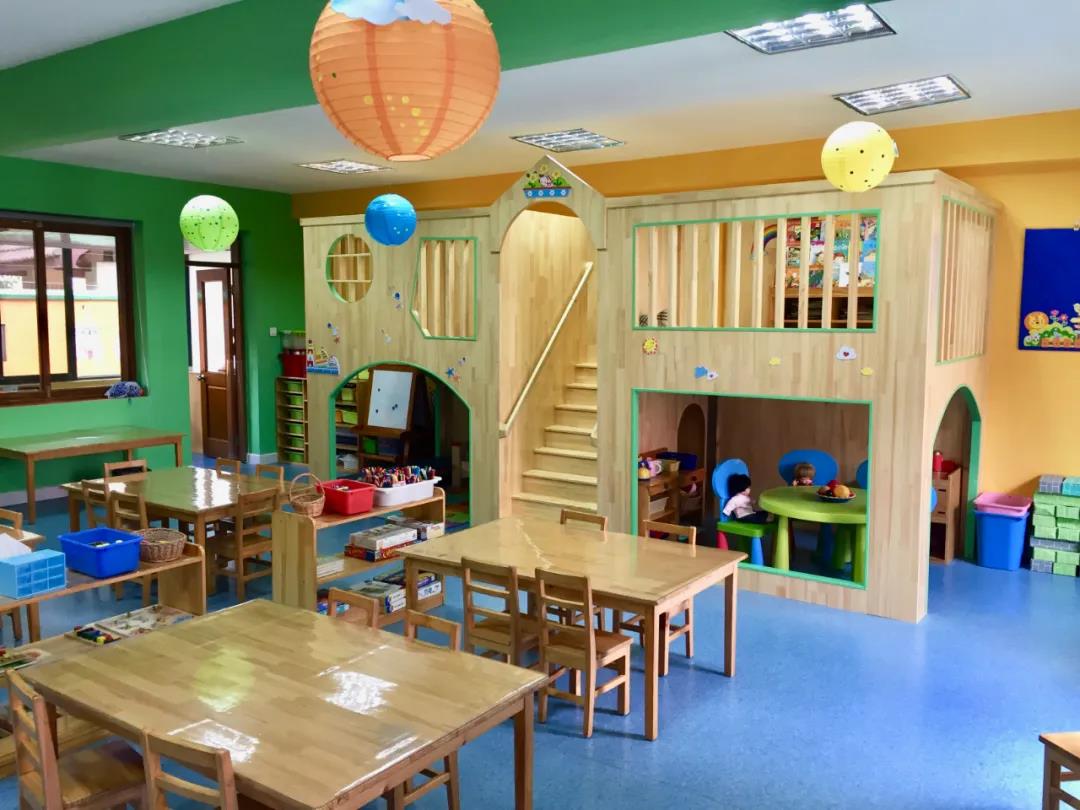
This three-year cycle aims to make children want to go to school to learn and develop their personality. Children learn together through play, guided activities, thinking and problem-solving, as well as practicing, recalling, and memorizing. For many children, La Maternelle is their first exposure to a second or third language.
Learning Environment
A caring, nurturing environment that stimulates curiosity, promotes creative thinking, and develops social skills. Children develop their oral language and begin to discover writing, numbers, and other areas of learning.
Language Development
Language acquisition is at the heart of the program and an integral part of all academic, motor, social, and artistic activities. It is explicitly taught through structured interactions, guided discussions, and targeted vocabulary development.
Social & Emotional Development
La Maternelle is the children's first real opportunity at social integration. They forge relationships with other children and adults, establish independent identities, and learn to listen, follow simple rules, share, and take turns.
Learning through play and structured teaching
The French preschool program combines play-based learning with structured teaching across major areas, with priority given to language and early mathematical tools since the 2025 renewal.
Mobilising language in all its forms
Acquiring oral language and discovering writing: rich vocabulary, progressive syntax, phonology, the alphabetic principle, and the first gestures of handwriting.
Developing early mathematical understanding
Exploring numbers, quantities, and problem-solving; comparing, ordering, and discovering shapes and sizes.
Acting and expressing through physical & artistic activities
Moving and communicating with one's body; perceiving, feeling, imagining, and creating through visual, sound, and performing arts.
Exploring the world & becoming a learner
Discovering the natural and human-made world through observation and manipulation; situating oneself in space and time and becoming a learner.
Teachers play a key role: they guide learning, structure activities, and support each child's progress.
Bilingual French/Chinese Education
Within Sunrise International Kindergarten, our program offers true half-day Chinese immersion alongside French as the primary language, with a qualified Chinese teacher present at all times.
French
Core instructionPrimary language of instruction, taught by qualified teachers holding the Professeur des Écoles diploma.
Chinese
Half-day immersionHalf of each school day is conducted in Chinese. A qualified Chinese teacher is present at all times, ensuring natural bilingual immersion throughout the child's entire day.
English
2 × 30 min / weekEnglish initiation with two 30-minute sessions per week.
The major themes of the program
Beyond the areas of learning, the program is organized around major cross-cutting themes that run through all of classroom life.
Learning to Work Together
Understanding social interaction norms, assuming age-appropriate responsibilities, listening to others, and exchanging ideas and feelings.
Language
Spontaneous exchanges, stories, explanations, and justifications: vocabulary, sentence structures, and language are explicitly taught through carefully designed activities.
Exploration of Written Language
Entering the world of reading and writing through phonology, the alphabetic principle, pre-writing, and writing, recognizing print in the surrounding environment.
Physical Activities
Harmonious motor, intellectual, and emotional development: action and language accompany the discovery of self, others, and the environment.
Discovering the World
Exploring materials, observing, manipulating, and offering critical judgments on experiments, verbalizing discoveries with precise language.
Sensitivity, Imagination, Creation
Developing sensitivity and imagination through works of art and the pleasure of building, inventing, singing, dancing, and making music.
A progression from TPS to GS
Each section supports the child at their own pace, in the continuity of learning, all the way to the start of elementary school.
A first school experience
Our TPS program for 2-year-olds introduces school gradually, in a loving and nurturing environment where children learn to build relationships and develop community-based and individual routines. It follows the French preschool system, adapted to the developmental needs of younger children: the same key skill areas as Petite Section, with work methods, content, games, and spaces adapted to each pupil.
Development and routines
Children become independent, use their five senses, explore creativity through arts and crafts, and develop gross and fine motor skills. Great emphasis is given to socialization, cooperation, and language. Daily schedules help the youngest adapt to community life. Children can attend full day or half day (morning only).
Learning through play
Children learn in an environment that fosters exploration, language, and play. Guided and encouraged, they explore a variety of materials through free exploration and structured activities: building, painting, playdough, drawing, manipulatives, playing outside, cooking, dancing, singing, rhyming games, and listening to stories read aloud.
Language development
Oral language is underscored throughout the curriculum and integrated within thematic contexts of science, social studies, art, movement, and music. Teachers provide structured opportunities to develop vocabulary, sentence construction, and early language skills.
Early literacy
Formal, structured activities develop pre-reading and pre-writing skills: phonological and phonemic awareness, letter identification, calligraphy, and pre-writing — including writing the first name.
Strengthening foundations
Moyenne Section strengthens and structures the skills introduced in Petite Section while preparing children for the more formal learning of Grande Section. Children continue developing the language, motor, and social skills introduced earlier.
Language and communication
Children begin to articulate in sentences, enhance recognition of sound patterns, identify some letters, and develop print concepts. They participate in class discussions, understand key elements in a story, and enrich their vocabulary.
Early literacy and thinking skills
Foundations for reading and writing build through forming syllables, word recognition, and letter shaping. Early mathematical thinking develops through counting, recognizing quantities, exploring patterns, and solving simple problems.
A pivotal year
Grande Section concludes the Early Childhood Program and is an important transition to primary school. Special attention is given to preparing children through structured learning in language, early literacy, and mathematics, while science, art, music, theatre, and physical education support creativity and overall development.
Learning approach and behaviours
Subject content broadens and classroom materials become more complex. Teachers provide interactive and play activities promoting social/emotional growth and motor development. Children develop independence, perseverance, and concentration, learning to follow instructions and work more autonomously.
Language, literacy & reading
Children expand oral language, improve sentence structure, and develop listening comprehension. They build phonemic awareness and progress to more advanced phonetic skills (letter-sound relationships), recognize letters, and begin to identify written words, exposed to rhymes, poems, narrative stories, and informational texts.
Mathematical thinking
Children develop early mathematical skills through counting, number recognition, simple operations, and problem-solving. They compare quantities, recognize patterns, and explore basic concepts of time and space.
By the end of Grande Section, children have strong foundations in language, thinking, and learning behaviors to ensure a successful transition to primary school.
Come discover our school
Visit our classes within Sunrise International Kindergarten and see the French Maternelle program in action.
Book a Visit